



Fuel Filter Basics: Why 3μm Filtration Matters for Agricultural Machinery
Introduction
Modern agricultural machinery operates in an environment that is fundamentally hostile to precision fuel systems. Dust, moisture, fluctuating temperatures, and inconsistent fuel quality are constant companions in the field. At the center of the engine's defense against these threats stands the Fuel Filter, a component whose importance far exceeds its modest size. Its job is straightforward but unforgiving: remove contaminants from diesel fuel before they reach the injectors, high-pressure pump, and other precision-engineered components that keep a tractor or combine running.
The stakes are higher today than ever before. As Sentinam, a fuel filtration specialist, explains, modern high-pressure common rail systems “operate to much tighter tolerances than older diesel engines, increasing their sensitivity to water, particulates and microbial contamination”. According to Donaldson, “particles as small as 2 to 3 microns, or the size range of bacteria, can cause irreparable damage” to these systems, including erosive injector wear and fuel pump scoring that compromise performance and fuel economy. This is why Fuel Filter efficiency—specifically the ability to capture particles at the 3-micron level—has become a defining requirement for agricultural machinery.
The consequences of inadequate filtration are not theoretical. A Herefordshire farm recently incurred more than £24,000 in repair costs after contaminated red diesel was linked to premature injector failures across four tractors, causing significant operational downtime. For farmers and fleet operators, such failures during planting or harvest season represent not just repair bills but lost productivity that cannot be recovered. The Fuel Filter is the first and most cost-effective line of defense against these outcomes.
This article examines why 3μm Fuel Filter efficiency has become essential for agricultural machinery. It covers the sources of fuel contamination on farms, the technical meaning of micron ratings, the specific demands of modern high-pressure fuel systems, and the practical maintenance practices that keep equipment running through the most demanding seasons. Whether you operate a single tractor or manage a fleet of harvesters, understanding Fuel Filter fundamentals is a direct investment in reliability.
Understanding Fuel Contamination in Agricultural Equipment
Fuel contamination is not a single problem with a single cause. It is a collection of distinct threats—solid particles, water, microbial growth, and chemical degradation—that enter the fuel system through multiple pathways on a working farm. Understanding what these contaminants are and how they reach the Fuel Filter is the first step toward preventing the kind of failures that cost one Herefordshire farm more than £24,000 in injector repairs across four tractors.
Common Contaminants: Dirt, Water, Rust, Microbial Growth, and Fuel Breakdown Particles
The contaminants that threaten agricultural fuel systems fall into several categories. Hard particulate matter—sand, dust, rust flakes from storage tanks, and metallic debris from pumps and injectors—is the most immediately damaging. These particles act like sandblasting media inside the fuel system, changing the fine tolerances of injectors and causing excessive wear around needle seats. Research on tractor and combine fuel tanks found that the highest concentration of particles up to 10 microns represented over 72% of the contaminant load in a combine harvester's tank.
Water is the second major threat. It enters fuel through condensation in storage tanks, particularly older single-skinned steel tanks that naturally accumulate moisture over time. Water causes corrosion in fuel pumps and injection systems, and when it reaches the injectors, it can cause catastrophic damage. As one technical analysis notes, "another type of diesel fuel contamination that affects the wear of precision parts of the fuel equipment is water content".
Microbial contamination—commonly known as "diesel bug"—develops at the interface between water and fuel. The resulting water layer at the bottom of a tank "provides conditions in which microbial contamination can develop," and Sentinam warns that this issue "can rapidly destroy fuel injection hardware". Specific microorganisms, including Bacillus species, have been identified in diesel samples collected from agricultural fuel storage tanks.
Fuel breakdown particles form when diesel oxidizes over time, creating gums, varnish, and sludge that circulate through the fuel system. These degradation products can clog filters prematurely and deposit on injector surfaces, disrupting spray patterns and combustion efficiency.
How Contaminants Enter the Fuel System on Farms
Contamination does not happen at a single point. It accumulates through the entire fuel supply chain, from delivery to storage to the machine itself.
Storage tanks are the primary entry point. Older steel tanks accumulate condensation, creating both water contamination and the conditions for microbial growth. An often-overlooked pathway is the tank breather. As Scott Grossbauer, director of clean fuel solutions at Donaldson, explains, "every diesel storage tank is open to the atmosphere. The reason is that when the fuel gets pumped out, air gets sucked in. Even atmospheric changes during the day can make the tank breathe in and out a little bit as the air inside expands and contracts. If you're in a dusty environment, that dirty air gets into the fuel as well".
Refueling practices introduce contaminants at the point of transfer. Dispensing nozzles, hoses, and filters that are not maintained allow dirt and water to pass directly into the machine's fuel tank. Fuel delivered from suppliers may also carry contaminants if the delivery truck or the supplier's storage system is compromised.
Environmental exposure is unavoidable in agricultural work. Dust-heavy environments shorten effective Fuel Filter life, and the uneven terrain and long working hours of tractors and harvesters place continuous stress on fuel systems. Every time a machine operates in a dusty field, the risk of contamination through vents, seals, and connections increases.
The Impact of Contaminated Fuel on Precision-Engineered Injection Systems
Modern agricultural machinery relies on high-pressure common-rail diesel engines that operate under injection pressures exceeding 2,000 bar. At these pressures, the clearances inside injectors and fuel pumps are measured in microns. A particle that is invisible to the naked eye can be large enough to cause damage.
The consequences are both immediate and cumulative. Scott Grossbauer of Donaldson explains the generational shift: "If you are running a tractor from the late '90s, you could probably get away with putting a little dirtier diesel in there. It would probably run and not damage anything. If you do that now on today's equipment, you'll either plug the filter up or if some of that contamination gets by the filter it can damage the injection system".
Research confirms the scale of the problem: at least 66% of malfunctions in diesel injectors for tractors are caused by issues related to the atomizer, and wear of injector parts occurs due to contamination of diesel fuel, leading to decreased engine power, increased fuel consumption, and reduced machine productivity. Contaminated fuel causes corrosion in fuel pumps and injection systems, and in severe cases, it can lock up the entire injection system.
The damage often builds slowly and quietly before it becomes visible. Injector wear alters spray patterns, which reduces combustion efficiency. The engine compensates by using more fuel, and power output gradually declines. By the time hard starting, black smoke, or rough idling become obvious, significant internal damage has already occurred. This is why the Fuel Filter—particularly one capable of capturing particles at the 3-micron level—is not a maintenance convenience but a critical protection component for modern agricultural machinery.
What Does 3μm Filtration Mean for a Fuel Filter?
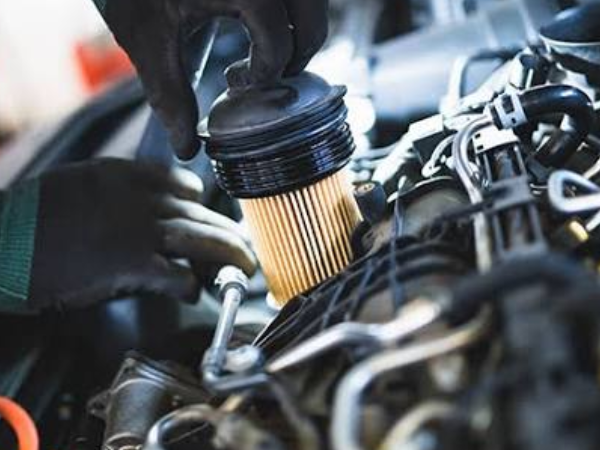
The term “3-micron Fuel Filter” is used frequently in product listings and maintenance guides, but its meaning is often misunderstood. To appreciate why 3μm filtration has become a benchmark for agricultural machinery, it is necessary to understand what micron ratings actually measure, how different efficiency levels translate into real-world engine protection, and why the industry is moving toward finer filtration standards.
Definition of Micron Rating and Filtration Efficiency in a Fuel Filter
A micron is a unit of measurement equal to one-millionth of a meter. To put this in perspective, a human hair is roughly 70 microns in diameter, and particles smaller than 30 to 40 microns cannot be seen with the naked eye. A Fuel Filter’s micron rating describes the size of particles it is designed to capture, answering a critical question: how small of a contaminant can pass through?
However, micron ratings are not all measured the same way. Diesel filters are typically rated as either nominal or absolute. A nominal rating indicates the filter captures a percentage of particles at a given size—often around 50 to 90 percent. An absolute rating means the filter captures nearly all particles of that size, typically 98 percent or higher. According to SAE International fuel system research, misunderstanding this distinction leads many operators to overestimate their filtration effectiveness. In other words, two filters both labeled “10 micron” can perform very differently depending on how that rating is defined.
For modern Fuel Filters, absolute ratings are the meaningful measure. A filter with an absolute rating of 3 microns captures nearly all particles at that size, whereas a nominal 3-micron filter may only capture a fraction of them. When evaluating filtration efficiency, look for published data using ISO 19438 test standards, which measure filtration efficiency using particle counting and contaminant retention capacity.
Comparison of 10μm, 5μm, and 3μm Fuel Filter Performance
The difference between a 10-micron and a 3-micron Fuel Filter is far greater than a simple numeric comparison suggests. It represents a fundamental difference in the level of engine protection provided.
10-micron filters were once the standard for diesel engines. They are still used as primary or pre-filters in many applications, particularly at the tank outlet or transfer pump, where their role is to remove larger debris such as rust flakes, dirt, and organic matter. However, Bosch has stated that “dirt particles >35µ are not permissible” for injector protection, meaning even a 10-micron filter leaves a significant gap in defense against damaging particles. Modern common rail diesels typically use a primary Fuel Filter rated at 10–30 microns to catch larger particles, followed by a secondary filter rated down to 2–5 microns to guard the injectors themselves.
5-micron filters represent a significant improvement. Bosch’s recommended filter quality calls for a “nominal rating 5µ, minimum 82% capture efficiency according to ISO/TR 19438”. However, even a 5-micron nominal filter may not be sufficient for modern high-pressure common rail systems, where components are machined to tolerances measured in microns and particles as small as 2 to 3 microns can cause irreparable damage.
3-micron filters are now considered the appropriate final-stage filtration for HPCR diesel engines. Donaldson’s High Efficiency Diesel Fuel Kit, for example, carries an efficiency rating of 3 micron @ 99% efficiency and is specifically designed for common rail diesel engines where the highest level of fuel cleanliness is required. Fleetguard’s NanoNet technology combines a 5-micron outer filtration stage with an ultra-fine 3-micron inner filter to provide premium final filtration. This multi-stage approach—coarse primary filtration followed by fine 3-micron secondary filtration—is the modern standard for protecting sensitive injection systems.
Why 3μm Is Becoming the Standard for Modern Diesel Engines in Agriculture
The shift toward 3μm Fuel Filter efficiency is driven by the relentless tightening of injector tolerances in modern diesel engines. A significant portion of malfunctions in diesel injectors for tractors is caused by issues related to the atomizer, with wear occurring due to contamination of diesel fuel. Whether they are injectors from Bosch, Delphi, Denso, or Siemens VDO, all common rail injectors share one critical characteristic: they operate under pressures exceeding 2,000 bar, and the components used in production have dimensional variations of only a few microns.
This extreme precision leaves virtually no tolerance for contamination. According to Donaldson, “particles as small as 2 to 3 microns, or the size range of bacteria, can cause irreparable damage”, including erosive injector wear that affects spray patterns and fuel pump scoring that compromises performance. The consequences build gradually but irreversibly: hard starting, rough idling, reduced power, and increased fuel consumption.
The filtration industry has responded to this challenge. There was a time when a Fuel Filter with an efficiency of 95–98% at 4 microns was considered high-performing. Today, HPCR fuel injection systems require filtration efficiency approaching 99.95% on 4-micron particles. This represents a fundamental shift in what “adequate” filtration means. Bosch’s own recommendation—5μ nominal minimum—was established years ago, and as injector tolerances have tightened further, the practical standard for final-stage Fuel Filter efficiency in agricultural machinery has moved to 3μm.
For agricultural operators, this shift has direct implications. Tier 4 and high-pressure common rail systems in modern tractors and combines operate with extremely tight tolerances, and Bosch diesel injection data confirms that injector components can be damaged by particles as small as 2 to 4 microns. A Fuel Filter rated at 10 microns or higher on a modern high-pressure system is not a cost-saving choice—it represents a slow-motion injector replacement schedule. Selecting a 3μm Fuel Filter is therefore not an upgrade but a requirement for protecting the substantial investment represented by modern agricultural machinery.
Why Agricultural Machinery Requires 3μm Fuel Filter Efficiency
The agricultural equipment of today bears little resemblance to the tractors and combines of previous decades. Modern machines rely on high-pressure common rail (HPCR) fuel systems that operate under injection pressures exceeding 2,000 bar, with some systems reaching 2,500 bar or higher. Within these systems, the clearances between injector needle and guidance components are measured in microns—typically in the 1 to 3 µm range. According to Delphi Technologies, today’s common rail injectors “inject fuel into the engine at much higher pressures – up to 30,000 psi – through clearances as small as 1 micron”. At this level of precision, even microscopic particles can cause permanent damage.
Modern Tractors, Combines, and Harvesters Use Sensitive High-Pressure Fuel Systems
The shift to HPCR technology has brought significant benefits—lower emissions, improved fuel economy, and better drivability. But it has also made fuel systems far more vulnerable to contamination. Bosch, one of the world’s leading diesel injection manufacturers, confirms that current diesel injectors “have tolerances as small as 1 micron compared to 100 microns not that long ago”. A human hair is approximately 70 to 100 microns in diameter, meaning that an injector’s internal clearances are up to 100 times smaller than a single strand of hair.
Big Bang Injection, a specialist in HPCR injector service, states that “the number 1 reason for injector wear is fuel contamination from particles or water. The injectors have guidance clearances in the 1-3 µm area. Every particle larger than that will cause injector damage”. Delphi further explains that “with tolerances a fraction the width of a human hair, even the smallest of particles can cause significant damage. Often the consequence of ineffective filtration, these minute particles can erode the control valve and ball, resulting in a poor seal between the two”. Over time, this erosion alters the fuel spray pattern and disrupts the quantity, timing, and distribution of fuel injected—leading to power loss, rough idling, and increased emissions.
Continuous Operation During Planting and Harvest Demands Uninterrupted Fuel Flow
Agricultural machinery does not operate on a convenient schedule. Planting and harvest windows are dictated by weather, crop maturity, and narrow seasonal calendars. Kevin Dhuyvetter, professor and Extension state leader at Kansas State University, explains the economic reality: “Places that have a relatively short or tight planting window can have high costs associated with downtime. If I’m down for a day and my planting season goes one day longer than optimal, this could have a relatively high cost”.
During peak season, a single day of downtime can cost €1,000 to €5,000 in lost productivity—often far more than the cost of a full filter service. A study by the U.S. PIRG Education Fund found that restrictive repair policies and unplanned breakdowns cost farmers approximately $3,348 per season. When a tractor or combine stops in the middle of harvest, the consequences ripple through the entire operation: labor sits idle, grain quality may degrade, and weather windows close. A Fuel Filter that provides 3μm efficiency ensures that fuel flows cleanly and consistently, reducing the risk of the injector failures that cause these costly interruptions.
The High Cost of Injector Failure Versus the Low Cost of a Quality Fuel Filter
The financial argument for 3μm Fuel Filter efficiency is straightforward. Injector replacement costs range from €300 to €800 per injector, depending on the machine and engine configuration. A high-pressure pump replacement costs between €1,500 and €3,000. For a six-cylinder tractor, a full injector replacement can easily exceed €3,000 in parts alone, before labor and diagnostic charges are added. When downtime during peak season is factored in, the total cost of a single contamination-related failure can reach five figures.
A real-world example illustrates the stakes. A Herefordshire farm experienced premature fuel injector failures across four John Deere tractors, resulting in more than £24,000 in repair costs and severe operational downtime. The root cause was contaminated red diesel that failed to meet the required fuel cleanliness standard. Sentinam, the fuel filtration specialist that resolved the issue, noted that “older steel storage tanks naturally accumulate water condensation over time, creating a breeding ground for microbial contamination—commonly known as ‘diesel bug’—which rapidly destroys fuel injection hardware”.
By contrast, a 3μm Fuel Filter that meets 99% efficiency at 3 microns represents a fraction of this cost. Donaldson’s High Efficiency Diesel Fuel Kit, for example, carries an efficiency rating of 3 micron @ 99% efficiency and is specifically designed for common rail diesel engines. The filter protects the entire fuel system—injectors, high-pressure pump, and fuel rail—from the particles that cause wear and failure. When evaluated through total cost of ownership, the economics are clear: the price of a quality Fuel Filter is negligible compared to the cost of an injector replacement, a high-pressure pump failure, or a day of lost harvest productivity.
For agricultural operators, the conclusion is straightforward. Modern high-pressure common rail engines demand fuel cleanliness that only 3μm Fuel Filter efficiency can provide. Bosch diesel injection data confirms that injector components can be damaged by particles as small as 2 to 4 microns. A filter rated at 10 microns or higher leaves a critical gap in protection. Selecting a 3μm Fuel Filter is not an optional upgrade—it is a fundamental requirement for protecting the substantial investment represented by today’s agricultural machinery and for ensuring that equipment is ready when the season demands it most.
Consequences of Using a Low-Efficiency Fuel Filter
The decision to use a low-efficiency Fuel Filter—or to extend its service life beyond recommended intervals—might appear to save money in the short term. In reality, it initiates a chain of consequences that range from gradual performance decline to sudden, catastrophic engine failure. For agricultural machinery operating under the relentless demands of planting and harvest, these consequences are not abstract risks. They are measured in lost productivity, repair bills, and missed seasonal windows that cannot be recovered.
Injector Clogging, Wear, and Premature Failure
The most immediate consequence of inadequate fuel filtration is damage to the injectors. Modern high-pressure common rail injectors operate with internal clearances measured in microns—typically 1 to 3 µm. As SAE International research explains, “inefficient fuel filtration leads to fuel injection systems’ premature failure, especially critical injectors’ internal parts, like nozzle, needle valve, and control valve”. When particles larger than the injector’s clearance pass through a low-efficiency Fuel Filter, they act as abrasive agents. Hard particulate matter scores precision mating surfaces, increasing clearances and causing progressive performance degradation. In severe cases, diagnostic testing has measured abrasive wear rates as high as 32% within injector components.
The damage is not limited to physical wear. Mineral contaminants cause excess wear and poor performance, while organic contaminants can clog injectors, resulting in rough idling and starting problems. Water contamination—which a quality Fuel Filter is designed to separate—corrodes fuel pump and injector surfaces, leading to fuel system failure that no amount of cleaning can reverse. The injector is the most vulnerable component in the entire fuel system, and it is also the most expensive to replace.
Reduced Engine Power, Poor Fuel Economy, and Increased Emissions
As injectors wear and clog, their ability to atomize fuel correctly diminishes. This creates a cascade of performance problems that operators notice but often misattribute to other causes. Fleetguard explains that “even particles that are barely visible can cause injector wear, altered spray patterns, and premature pump damage. Over time, this leads to power loss, increased fuel consumption, and uneven engine behaviour”. A tractor that once pulled a heavy implement with ease begins to hesitate, respond slowly, or feel underpowered during tasks it previously handled without strain.
Fuel economy suffers in parallel. When injectors do not atomize fuel correctly, combustion efficiency drops. The engine compensates by using more fuel to achieve the same output. Research on agricultural diesel engines confirms that wear of injector parts due to fuel contamination “leads to a decrease in engine power, increased fuel consumption, environmental pollution and a decrease in machine and labor productivity”.
The environmental dimension is equally serious. Black exhaust smoke is a visible indicator that the engine is not achieving complete combustion. Clogged or restricted Fuel Filters can cause excessive soot, and black smoke from the exhaust is a recognized sign that injectors need attention. For Tier 4 Final and Stage V agricultural engines equipped with diesel particulate filters (DPF) and selective catalytic reduction (SCR) systems, incomplete combustion accelerates DPF soot loading and can trigger frequent regeneration cycles or, in severe cases, force the engine into derate mode. What begins as a filtration problem becomes an emissions compliance problem and, ultimately, a productivity problem.
Unplanned Downtime During Critical Farming Seasons and Costly Repairs
The most economically damaging consequence of low-efficiency Fuel Filter use is unplanned downtime during planting or harvest. Agricultural breakdowns do not arrive conveniently. They occur when equipment is working at maximum capacity under seasonal deadlines that cannot be shifted.
The financial impact is substantial. According to a 2023 U.S. PIRG Education Fund study, restrictive repair policies and unplanned breakdowns cost farmers approximately $3,348 per season. For rapeseed, a delay in planting can cost an average of about 1.5% of the harvest per day—approximately $15 per hectare in losses for each day of downtime. When a combine or tractor stops in the middle of harvest, the losses compound daily: grain quality may degrade, labor sits idle, and weather windows close.
The repair costs that follow injector failure are equally significant. A Herefordshire farm experienced premature fuel injector failures across four John Deere tractors after contaminated red diesel caused £24,000 in damages and severe operational downtime. Dealer replacement costs for injector repairs commonly range from $1,000 per injector, with some OEM injectors priced at approximately $900 each. A single ignored injector issue can trigger engine rebuild costs exceeding $3,000, and in severe cases, complete engine overhauls can exceed $20,000. Set against these figures, the price of a quality 3μm Fuel Filter is negligible.
The lesson from these failures is consistent. Sentinam’s Managing Director Neil Turnbull states plainly: “Across the UK, millions of litres of diesel are discarded annually due to poor storage conditions, when much of it is entirely salvageable. As modern agricultural machinery becomes vastly more sophisticated, fuel cleanliness must be treated with the same priority as mechanical servicing”. A low-efficiency Fuel Filter is not a cost-saving measure—it is a deferred expense that accrues interest in the form of injector wear, fuel waste, and lost harvest days.
Choosing the Right Fuel Filter for Your Agricultural Equipment
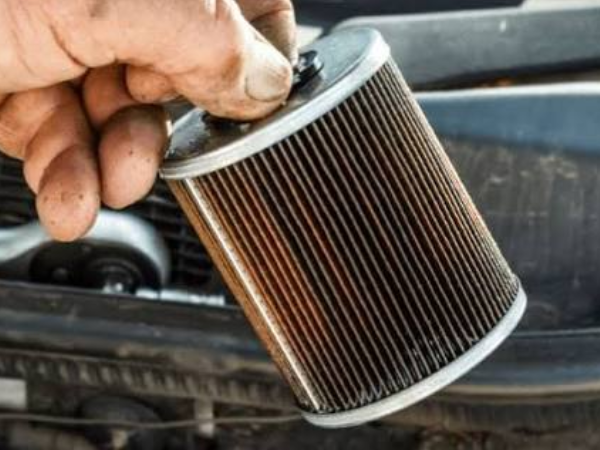
Choosing the right Fuel Filter for agricultural machinery is not a matter of picking the closest match on a shelf. It requires a clear understanding of your engine's fuel system, the quality of fuel you use, and the operating conditions your equipment faces. A filter that is undersized, over-restrictive, or incompatible with your fuel type can cause the very damage it is meant to prevent. The following factors should guide your selection process.
Key Specifications: Micron Rating, Flow Rate, Working Pressure, and Temperature Range
The micron rating is the first specification to evaluate. For modern high-pressure common rail engines used in tractors and combines, a Fuel Filter with a 3-micron efficiency rating at 99% or higher is the appropriate final-stage filtration standard. Donaldson's High Efficiency Diesel Fuel Kit, for example, carries an efficiency rating of 3 micron @ 99% and supports fuel flow rates up to 114 lph / 30 gpm. Some filters, such as the Baldwin PF7973, are rated at 3 microns nominal and 9 microns absolute, with application across John Deere engines and agricultural equipment. The RE522878 final Fuel Filter, a widely used John Deere specification, carries a nominal micron rating of 2 microns, reflecting the extreme precision required by modern injection systems.
Flow rate must match your engine's fuel demand. A filter that cannot deliver sufficient volume will cause fuel starvation under load, leading to power loss and potential injector damage. Working pressure is equally important—high-pressure common rail systems operate at pressures that require filter housings and media capable of withstanding continuous stress without deformation or bypass. Temperature range determines performance in cold starts and hot field conditions. The RE522878, for instance, is designed to operate effectively across the temperature extremes encountered in agricultural work, with dimensions of 85 mm outer diameter, 198 mm height, and a 3/8"-16UNF thread size. Always verify that the Fuel Filter you select meets or exceeds the specifications of the original equipment.
Compatibility with Biodiesel, Ultra-Low Sulfur Diesel, and Varying Fuel Qualities
Fuel composition has changed dramatically in recent years, and Fuel Filter selection must reflect these changes. Ultra-low sulfur diesel (ULSD) is now the standard for agricultural machinery, with sulfur content limited to 15 ppm or less. Doosan engines, for example, specify ULSD with a maximum sulfur content of 15 wtppm, and the fuel filter is required to remove water and foreign materials to protect the injection pump and common rail system.
Biodiesel introduces additional considerations. Many modern Fuel Filters are explicitly compatible with biodiesel and biodiesel blends. The Baldwin BF46158, for example, lists its compatible fluid type as "Biodiesel Fuel; Diesel Fuel" and is suitable for farm equipment, buses, and construction machinery. However, biodiesel has a greater tendency to absorb water than conventional diesel, which can encourage microbial growth and corrosion. Farmers Weekly notes that "biodiesel has the ability to absorb considerably more water than regular diesel, which can encourage the development of diesel-bug micro-organisms". When using biodiesel, select a Fuel Filter with high water-separation capability and consider more frequent replacement intervals.
Fuel quality on farms is often inconsistent. Storage tank condensation, aging fuel, and contamination introduced during refueling all affect what the Fuel Filter must capture. A filter that performs adequately with fresh, clean fuel may clog rapidly when fuel quality is poor. For operations where fuel quality is uncertain, Donaldson recommends the installation of additional primary fuel filtration to provide added engine protection. The RE522878's coated media is designed to repel water and contaminants, reducing damage to fuel components even when fuel quality varies.
OEM vs Aftermarket Fuel Filter Options and Cross-Reference Guides
The choice between OEM and aftermarket Fuel Filters involves trade-offs between cost, guaranteed compatibility, and warranty considerations. OEM filters, such as those supplied by John Deere, are designed and tested to meet or exceed original specifications, promoting a perfect match for the machine. Using an OEM Fuel Filter provides guaranteed fit and functionality, high-quality construction, and—in many cases—protection of the equipment warranty. Mahindra's guidance on OEM filters states that "many tractor manufacturers require that you use OEM parts to maintain your warranty coverage," and that OEM filters are "built to filter out contaminants that could cause damage to the engine" in ways that some aftermarket filters may not match.
Aftermarket Fuel Filters from reputable manufacturers offer a cost-effective alternative without sacrificing quality. Brands such as Baldwin, Donaldson, Mann-Filter, and Fleetguard produce filters that meet or exceed OEM standards and are cross-referenced to original part numbers. The VPD6008 aftermarket Fuel Filter, for example, serves as a direct replacement for the OEM Perkins 26560008 filter and is cross-referenced with equivalent part numbers from Massey Ferguson, Landini, McCormick, Case IH, Caterpillar, Claas, JCB, John Deere, Kubota, New Holland, and Volvo. This cross-referencing capability allows farmers and fleet managers to source filters from multiple suppliers, reducing dependency on a single source and often lowering costs.
When selecting an aftermarket Fuel Filter, verify that the manufacturer publishes filtration efficiency data using recognized standards such as ISO 19438 or ISO 4020. A filter that claims "OEM quality" without providing test data should be treated with caution. For equipment under warranty, check whether the manufacturer permits aftermarket filters and whether documentation of equivalent specification is required. When in doubt, consult a trusted filtration supplier who can cross-reference your OEM part number and recommend a filter that meets the required specifications for your engine and fuel type.
Fuel Filter Maintenance and Replacement Best Practices
Maintaining a Fuel Filter is not a one-time task—it is a continuous discipline that determines how long your injectors, high-pressure pump, and engine will last. In agricultural machinery, where equipment operates under heavy loads in dusty environments and often sits idle between seasons, the Fuel Filter faces a unique set of stresses. Following proven maintenance and replacement practices protects your investment and keeps equipment ready when the season demands it.
Recommended Replacement Intervals for Agricultural Machinery
Replacement intervals vary by equipment type, engine size, and operating conditions, but clear guidelines exist. For compact tractors, Trigreen Equipment recommends replacing the Fuel Filter after 250 hours if no alarms appear, or sooner if the machine indicates a plugged filter via low fuel pressure warnings. For larger diesel engines, the interval extends to 300–500 hours depending on displacement—approximately 300 hours for a 2.9L engine and 500 hours for a 4.5L engine.
Kubota specifies a 400-hour replacement interval for its combine harvester Fuel Filters, with cleaning recommended every 100 hours. Case IH advises changing the filter every 600 hours or once per year, whichever comes first. For John Deere agricultural equipment using the RE522878 final Fuel Filter, real-world service life typically ranges from 250 to 600 engine hours depending on fuel quality and operating conditions. As a universal rule, no Fuel Filter should remain in service for more than one year, even if the hour meter has not reached the recommended interval. Fuel degradation, moisture accumulation, and microbial growth occur over time regardless of engine usage.
Warning Signs: Hard Starting, Power Loss, Black Smoke, and Rough Idling
A Fuel Filter approaching the end of its service life communicates its condition through observable symptoms. Hard starting is often the first sign—the engine cranks excessively before firing, or fails to start altogether. This occurs because a restricted Fuel Filter cannot deliver adequate fuel pressure to the injection system during cranking. Loss of power under load follows as the filter becomes more restricted. The engine may feel sluggish on climbs, hesitate under acceleration, or surge unpredictably. Rough idling or stalling at low RPM indicates inconsistent fuel delivery, often caused by a partially clogged Fuel Filter or air entering the system.
Black exhaust smoke is a serious indicator that demands immediate attention. When the Fuel Filter restricts fuel flow, the air-fuel mixture becomes unbalanced, leading to incomplete combustion and visible black smoke. Higher-than-usual fuel consumption often accompanies these symptoms, as the engine compensates for reduced fuel delivery by injecting more fuel to maintain power. Any of these signs warrants immediate Fuel Filter inspection and replacement—delaying service risks injector damage that costs far more than the filter itself.
Proper Installation Techniques to Prevent Contamination and Ensure a Tight Seal
Installing a Fuel Filter correctly is as important as choosing the right one. Contamination introduced during installation can bypass the new filter and damage the injection system immediately. Fleetguard’s installation guidelines emphasize that all gaskets must be present and fitted securely, the mounting thread must be in good condition, and the filter body must be free from defects.
Before installation, clean the filter head thoroughly and inspect it for damage. Apply a liberal amount of clean diesel fuel or lube oil to the gasket surfaces where they contact the head—never use grease or install with dry gaskets. Check the engine manufacturer’s requirements for pre-filling the Fuel Filter. If pre-filling is permitted, use only clean diesel fuel and never pre-fill the clean side of the filter. For spin-on filters, tighten according to the instructions printed on the canister. Insufficient torque can cause gasket failure and fuel leaks; over-tightening can damage the gasket or filter shell. After installation, start the engine and let it idle for a minute, checking for leaks and clearing any warning lamps. Air leaks at O-ring or hose connections cause extended cranking, so proper seating and torque matter.
The RE522878 final Fuel Filter exemplifies these design principles. Its coated media repels water and contaminants, and its tight pleats with even media spacing provide maximum surface area for capturing particles. Metal end caps offer superior strength and moisture resistance, and the tight seal between media and casing prevents unfiltered fuel from reaching the engine. When installed correctly, this filter delivers the protection that modern agricultural engines demand.
The Role of Glass Fiber Media in 3μm Fuel Filter Performance
The filtration efficiency of a Fuel Filter is determined not by its housing or its thread size, but by the media inside it. For achieving 3μm filtration accuracy in modern agricultural machinery, glass fiber media has become the material of choice. Its unique physical properties allow filter manufacturers to meet the extreme cleanliness requirements of high-pressure common rail diesel engines, where particles as small as 2 to 3 microns can cause irreversible injector damage.
Why Glass Fiber Media Is Preferred for Fine 3μm Filtration
Glass microfibers are extremely fine and uniform in diameter, creating a dense network of pores that can capture the tiniest particles. As Gessner Filtration explains, "Glass microfibers are extremely fine and uniform, creating a dense network of pores that can capture the tiniest particles — enabling over 99% filtration efficiency at the critical ~4 µm size". This level of efficiency is not achievable with conventional cellulose media alone. In modern high-pressure diesel engines, which are sensitive to microscopic contaminants, these ultra-fine fibers are indispensable for removing particles that cellulose or synthetic fibers might miss, thus preventing injector wear and fuel system damage.
Ahlstrom, a leading filtration media manufacturer, confirms that its micro glass products remove particles in the range of 3μm to 6μm, and incorporate hydrophobic chemistries to provide the best possible fuel-water separation. This dual capability—fine particle capture combined with water separation—is particularly valuable in agricultural applications, where fuel quality is often inconsistent and water contamination is a persistent threat.
Pleated Design for Increased Surface Area and High Dirt-Holding Capacity
Glass fiber media alone is not sufficient. Its performance depends on how it is structured within the Fuel Filter. The pleated design is critical for maximizing surface area and dirt-holding capacity. As Gessner explains, pleated media "can be pleated on rotary and knife pleater" and its "high dirt-holding capacity means filters last longer before clogging, extending service intervals". Research on pleated filter elements confirms that a pleated design "provides an extremely large surface area with a large dirt holding capacity particularly where solid contaminants are concerned".
The RE522878 final Fuel Filter exemplifies this design philosophy. John Deere specifies that its "tight pleats and even media spacing provide maximum surface area, effectively catching water and particles down to five microns in certain applications". The filter also features metal end caps that "offer superior strength and resistance to moisture, promoting long-lasting performance and reliability". A tight seal between the media and the filter casing keeps unfiltered, dirty fuel from entering the engine, maintaining optimal performance and prolonging engine life.
Advanced Multi-Layer Media Design: Glass, Meltblown, and Cellulose
Modern glass fiber Fuel Filters rarely use a single layer of media. The most advanced designs employ a three-layer sandwich structure that combines the strengths of different fiber types while compensating for their weaknesses. Gessner's 3-layer fuel filter media illustrates this approach. The core layer of micro-glass fibers "captures the tiniest particles and pushes filtration efficiency into the ~99%+ range (at 4µm)". A meltblown layer on the upstream side "traps larger debris and boosts dust holding capacity (DHC) — effectively protecting the glass layer from premature clogging or damage". A saturated cellulose base layer provides "the necessary strength and foldability for standard pleating processes".
The result, as Gessner summarizes, is a design where "each fiber type plays a role: glass for ultra-fine filtration, synthetic for capacity, cellulose for stability". This layered approach achieves "ultra-fine filtration without sacrificing filter life or handling". It also addresses a practical concern with glass fiber media: glass fibers alone are brittle, and the sandwich structure "protects the micro-glass layer from damage, preventing loss of glass fibers" and "safeguarding your employees" from potential health risks associated with fiber shedding.
For high-efficiency diesel filtration, Gessner reports that its three-layer composition achieves "initial efficiencies up to 99.95% at particles greater than 4µm", with the micro-glass layer providing the highest possible efficiencies while still retaining dust-holding capacity. This level of performance is what allows a 3μm Fuel Filter to meet the demands of modern HPCR injection systems, where Bosch confirms that injector components can be damaged by particles as small as 2 to 4 microns.
RE522878: A Practical Example of Glass Fiber Filtration for Agricultural Machinery
The RE522878 final Fuel Filter is a widely used specification for John Deere agricultural machinery, including 7030 series tractors. Its technical characteristics demonstrate how glass fiber media translates into real-world performance. The filter carries a nominal micron rating of 2 microns, reflecting the extreme precision required by modern injection systems. Its coated media is designed to repel water and contaminants, "reducing damage to fuel components and promoting optimal engine performance".
Physically, the RE522878 has an outer diameter of approximately 85 mm, a height of 198 mm, and a 3/8"-16UNF thread size. Its pleated construction and metal end caps contribute to durability and reliable sealing. The tight seal between media and casing is critical—it "keeps unfiltered, dirty fuel from entering the engine, maintaining optimal performance and prolonging engine life".
For agricultural operators, the RE522878 represents the practical application of glass fiber filtration technology. It is a Fuel Filter designed not merely to meet a specification, but to protect the injectors, high-pressure pump, and fuel rail of engines that operate in dusty, unforgiving environments where reliability is measured in harvest days, not laboratory hours.
Conclusion
Modern agricultural machinery depends on high-pressure common rail fuel systems that operate with injector clearances measured in microns. Particles as small as 2 to 3 microns can cause irreversible wear, leading to power loss, increased fuel consumption, and costly downtime during critical planting and harvest seasons. A Fuel Filter with 3μm filtration efficiency is not an optional upgrade—it is a fundamental requirement for protecting injectors, pumps, and the entire fuel system from the contaminants that inevitably enter diesel fuel on a working farm.
Choosing a quality 3μm Fuel Filter from a trusted filtration supplier delivers long-term benefits that far outweigh the initial cost: reliable engine performance, improved fuel efficiency, reduced emissions, and a significantly lower total cost of ownership. Whether you operate a single tractor or manage a fleet of harvesters, the investment in proper filtration pays for itself many times over by preventing the injector failures and unplanned downtime that can cost thousands in repairs and lost productivity. Protect your equipment, your harvest, and your bottom line—choose the right Fuel Filter for the job.
FAQ About Fuel Filter for Agricultural Machinery
How often should I replace my Fuel Filter?
Replacement intervals depend on the machine, engine size, and operating conditions. For compact tractors, many manufacturers recommend replacing the Fuel Filter every 250 hours, while larger diesel engines often specify 300 to 500 hours. Kubota lists a 400-hour interval for combine harvester Fuel Filters, and Case IH advises changing the filter every 600 hours or once per year, whichever comes first. John Deere’s RE522878 final Fuel Filter, widely used in agricultural machinery, typically delivers 250 to 600 engine hours of service depending on fuel quality. Regardless of hour-meter readings, no Fuel Filter should remain in service for more than one year. Fuel degradation, moisture accumulation, and microbial growth occur over time even when the engine is not running. When in doubt, replace the filter—the cost is minimal compared with injector damage.
Can I use a 10μm Fuel Filter instead of 3μm?
Using a 10μm Fuel Filter where a 3μm filter is specified is not a safe substitution for modern high-pressure common rail engines. Bosch has confirmed that current diesel injectors have tolerances as small as 1 micron, and particles larger than 2 to 3 microns can cause irreversible wear. A 10μm filter may be acceptable as a primary or pre-filter to capture larger debris, but it cannot provide the final-stage protection that injectors require. Donaldson states that “particles as small as 2 to 3 microns, or the size range of bacteria, can cause irreparable damage” to common rail systems. For agricultural machinery equipped with HPCR fuel systems, a 3μm Fuel Filter with 99% efficiency at 3 microns is the appropriate final-stage specification. Using a coarser filter may save a few dollars at purchase but risks thousands in injector and pump repairs.
What happens if I don't change my Fuel Filter regularly?
Neglecting Fuel Filter replacement sets off a chain of consequences that begins with restricted fuel flow and ends with engine damage. Initially, a clogged filter causes hard starting, rough idling, and power loss under load. As restriction increases, the engine may derate or stall, and black exhaust smoke becomes visible due to incomplete combustion. Meanwhile, contaminants that bypass a saturated filter reach the injectors and high-pressure pump, causing abrasive wear and corrosion. Research confirms that inefficient fuel filtration leads to premature injector failure, with wear rates measurable within injector components. Water contamination—which a quality Fuel Filter is designed to separate—corrodes fuel system surfaces and can lock up the injection system entirely. In agricultural operations, these failures often occur during planting or harvest, when downtime costs can reach thousands per day. A Herefordshire farm incurred more than £24,000 in repairs after contaminated fuel caused injector failures across four tractors. Regular Fuel Filter replacement is the cheapest insurance against these outcomes.
Are 3μm Fuel Filters compatible with all diesel engines?
No. A 3μm Fuel Filter is designed for modern high-pressure common rail diesel engines that require ultra-fine filtration to protect injectors with micron-level clearances. Older diesel engines with mechanical injection systems and looser tolerances may not require—and in some cases may not benefit from—3μm filtration. In fact, installing a very fine filter on an older engine with a dirty fuel system can cause rapid clogging and fuel starvation. For modern agricultural machinery from John Deere, Case IH, New Holland, Kubota, and similar manufacturers, 3μm final-stage Fuel Filters are the appropriate specification. For older equipment, consult the owner’s manual or a filtration specialist to determine the correct micron rating. Always verify compatibility with your engine’s fuel system and fuel type, including biodiesel blends. When selecting a Fuel Filter, match the specification to the engine, not to a generic “one size fits all” recommendation.
Final Thoughts
The Fuel Filter is a small component with an outsized role in protecting modern agricultural machinery. Regular replacement, correct micron rating, and compatibility with your engine’s fuel system are the keys to reliable performance. When questions arise, consult your equipment manual, verify specifications with a trusted supplier, and always prioritize filtration quality over short-term savings.



Company: Shandong Topkit Construction Machinery Equipment Co., Ltd.
Phone: +86 152 6392 0563
WhatsApp: +86 152 6392 0563
Email: [email protected]
Address: 1-1-401, Hailiang Mansion, Liuhang Street, High-tech Zone, Jining City, Shandong Province, China